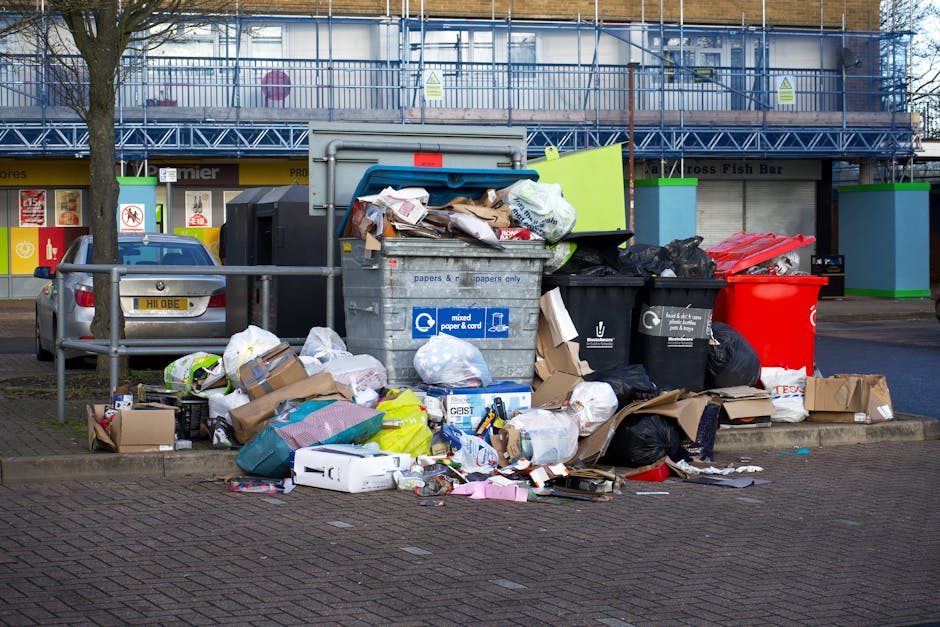
Pembridge Road small van rubbish collection Notting Hill
If you live or work around Pembridge Road, you already know that rubbish collection can be awkward in a way that sounds minor until you are actually carrying bags, broken furniture, or builder's waste down narrow steps on a busy street. A Pembridge Road small van rubbish collection Notting Hill service is built for exactly that sort of job: quick access, careful loading, and less disruption than a larger vehicle or a do-it-yourself run to the tip. It is especially useful where parking is tight, time matters, and you want waste removed without turning the day into a small expedition.
This guide explains how small van rubbish collection works, who it suits, what to expect on the day, and the details people often miss until the last minute. If you want a wider view of nearby clearance options too, you can also look at waste removal, flat clearance, home clearance, and furniture disposal.
Quick takeaway: If the job is too large for bin bags but too awkward for a big lorry, a small van clearance is often the most practical middle ground. It is neat, flexible, and well suited to Notting Hill's tighter streets.
Table of Contents
- Why Pembridge Road small van rubbish collection Notting Hill matters
- How the service works in practice
- Key benefits and practical advantages
- Who this is for and when it makes sense
- Step-by-step guidance
- Expert tips for better results
- Common mistakes to avoid
- Tools, resources and recommendations
- Law, compliance, standards and best practice
- Options, methods and comparison table
- Case study or real-world example
- Practical checklist
- Conclusion
- Frequently asked questions
Why Pembridge Road small van rubbish collection Notting Hill Matters
Pembridge Road sits in a part of London where access can be more demanding than people expect. That matters because waste collection is not just about carrying items away; it is also about getting close enough to do the job safely, legally, and without causing hassle for neighbours, pedestrians, or traffic. A small van is often the right size for these streets because it can handle a surprisingly useful amount of rubbish while staying nimble.
Let's face it, a clearance job can become stressful for simple reasons: you may have bulky furniture blocking a hallway, renovation debris piled by the front door, or old office items that need to go fast. If you are trying to squeeze everything into an ordinary car, it can turn into several trips and a lot of wasted time. A small van rubbish collection service takes the pressure off by bringing the capacity and the loading help in one go.
There is also a practical local angle. In Notting Hill, residents often have to work around narrow bays, shared entrances, basement flats, and busy pavements. A small van is easier to position, quicker to load, and usually less disruptive than larger clearance vehicles. That can make all the difference when you are clearing items from a flat, a townhouse, or a small business premises.
If you need a broader service context, the site's insurance and safety information and recycling and sustainability approach are useful pages to review before booking.
How Pembridge Road small van rubbish collection Notting Hill Works
The process is usually straightforward, but the good operators make it feel calm rather than rushed. In most cases, it begins with a description of what needs removing: bagged rubbish, furniture, mixed household waste, light builders' waste, or a combination of items. The more accurate you are at the start, the smoother the collection tends to be. Not glamorous, but true.
On the day, the team arrives in a small van that can handle local access better than a large truck. The crew assesses the load, confirms what is going, and then removes the items from the property or kerbside. Good practice is to protect floors where needed, keep a tidy loading path, and avoid leaving waste spread around the entrance. You will notice the difference immediately if you have ever dealt with a messy clear-out before.
Depending on the waste type, the items may then be sorted for reuse, recycling, or disposal. That sorting stage matters. A bag of mixed waste is not the same as separated cardboard, metal, wood, or reusable furniture. The better the sorting, the more efficient the collection can be, and the cleaner the overall result.
For jobs that are more specialised, you may want to compare with related services such as builders waste clearance, garage clearance, or loft clearance. Those can be a better fit if the rubbish is coming from one specific part of the property rather than a general clear-out.
Key Benefits and Practical Advantages
The main advantage is simple: a small van gives you a sensible balance of capacity and flexibility. That sounds obvious, but in practice it matters a lot. Here is why people choose it.
- Better access: small vans are easier to manoeuvre on tighter roads and around limited parking spaces.
- Less disruption: shorter loading times and a smaller vehicle footprint can reduce inconvenience to neighbours and passers-by.
- Good for mixed loads: ideal for a handful of bulky items, several bin bags, or a modest clear-out.
- Faster turnaround: for many jobs, a small van collection avoids the stop-start feel of multiple car trips.
- More practical than waiting: if clutter is affecting a move, refurbishment, or tenancy handover, quick removal helps you move on.
There is another benefit people overlook: the mental one. Clearing a room full of odds and ends can be surprisingly draining. Once the waste is gone, the space feels larger, lighter, and easier to think in. A bit dramatic maybe, but anyone who has opened a room door and thought "right, that needs sorting" will know what I mean.
If you are dealing with furniture specifically, the site also offers furniture clearance and furniture disposal, which may suit sofas, wardrobes, tables, chairs, or office furniture that has simply reached the end of the line.
Who This Is For and When It Makes Sense
This type of collection is not only for large decluttering projects. In fact, a small van rubbish collection often makes the most sense for everyday, practical jobs. A few examples help.
- Residents in flats or maisonettes: especially when stair access, shared hallways, or limited parking make removal awkward.
- Landlords and letting agents: for quick turnaround between tenancies, furniture removal, or leftover household waste.
- Small offices and studios: when desks, packaging, filing, or obsolete equipment needs clearing in a controlled way.
- Homeowners doing a reset: after decorating, a room change, or a long-overdue declutter.
- Tradespeople: when a modest amount of builders' waste needs removing without booking a larger skip.
It is also a strong option for people who do not want to spend their evening loading a car full of awkward rubbish, then driving it around London, then trying to unload it at the other end. That sort of plan sounds heroic at 7am and deeply annoying by 4pm.
For bigger residential clearances, a related option may be house clearance or flat clearance. If the task is more commercial, business waste removal or office clearance may be more appropriate.
Step-by-Step Guidance
If you want the process to run smoothly, it helps to think in a few simple stages. Here is the practical version.
- List the items clearly. Separate furniture, bagged rubbish, broken household items, and any special waste you are unsure about.
- Estimate volume honestly. A small van is good for many jobs, but it is still worth being realistic. Overstuffing the plan causes delay.
- Check access. Note stairs, basement steps, narrow entrances, resident parking rules, and any time restrictions.
- Prepare the waste. Put loose rubbish in bags, stack items safely, and keep walkways clear.
- Confirm what should stay. This is the one people forget most often. Label the items that are not to be taken. Seriously, it saves a headache later.
- Review the collection details. Make sure the team knows your location, access notes, and preferred timing.
- Walk the space after removal. Check corners, under shelves, and behind doors. Small items hide in plain sight.
A good collection is as much about preparation as vehicle size. Ten minutes of sorting beforehand can save a lot of back-and-forth on the day. And if you are removing a mix of items, it is worth checking the site's pricing and quotes information so you understand how the job is assessed.
Expert Tips for Better Results
Here are the little details that make a collection work better in real life, especially on a street like Pembridge Road where the margin for error is not huge.
- Stage the waste near the exit, but safely: keep pathways open and avoid building a leaning tower of boxes by the front door.
- Keep recyclable materials separate: cardboard, metal, and clean wood are easier to manage when grouped sensibly.
- Take photos if the load is complex: useful for your own reference and for avoiding misunderstandings.
- Be precise about what is included: old mattress? broken shelving? garden waste? say it plainly.
- Choose the right timing: quieter windows can make access easier and reduce disruption to neighbours.
One more thing: if you are clearing from a top floor flat, tell the team in advance whether there is lift access. A lot of the stress in clearance jobs comes from assumptions, not the waste itself. A small detail, but it can change the whole day.
For outdoor waste or mixed property jobs, the site's garden clearance page is also worth a look, especially if the load includes branches, soil-filled bags, or old patio clutter.
Common Mistakes to Avoid
Most problems with rubbish collection are preventable. Usually it is not the service itself that goes wrong; it is the planning around it. Here are the usual suspects.
- Underestimating volume: what looks like "a few bits" can become a much larger load once you start moving it.
- Mixing in restricted items without warning: certain waste streams need separate handling, so never assume everything can go together.
- Blocking access routes: if the team cannot get to the waste safely, the job becomes slower and more awkward for everyone.
- Leaving decisions until arrival: sorting what stays and what goes should happen before the van turns up, ideally.
- Forgetting building or neighbour constraints: loading at the wrong time can create tension in shared properties. Nobody wants that.
There is also a quieter mistake: choosing a vehicle size by habit rather than by reality. Bigger is not always better. Sometimes the small van is the smarter choice because it fits the site and the job, even if it sounds modest.
Tools, Resources and Recommendations
You do not need a complicated toolkit for a small van rubbish collection, but a few practical items help things run more smoothly.
- Strong waste bags: useful for loose rubbish, textiles, soft plastics, and light mixed waste.
- Labels or tape: mark items to keep, especially in a busy household or shared office.
- Gloves and sturdy shoes: sensible for anyone helping with prep work before collection.
- Basic measuring tape: handy if you are checking whether bulky furniture will fit through a doorway or down stairs.
- Phone photos: surprisingly useful for remembering what needs removing, especially if the job spans a few rooms.
From a service-planning point of view, these website pages are the most useful companions to this topic: waste removal for broad collection needs, pricing and quotes for budget planning, and recycling and sustainability for how recyclable materials are handled. If you want to understand the company background, the about us page is also helpful.
Law, Compliance, Standards, or Best Practice
Waste collection in the UK is not something to treat casually. Even when the job looks small, good practice still matters. That means using a responsible collector, being clear about what waste is involved, and making sure items are handled in a way that fits accepted disposal and recycling standards. In plain English: don't hand over rubbish and hope for the best.
For householders and businesses alike, the sensible expectation is that waste is transported, sorted, and disposed of responsibly. If there is furniture, electrical equipment, or mixed construction material in the load, it should be separated and managed according to the type of material. You do not need to memorise all the technical detail, but you should expect a professional approach rather than a vague "we'll sort it out later".
Safety also matters. Tight access, stairwells, shared entrances, and heavy objects all bring practical risks. Good operators think about lifting technique, route planning, and protecting surfaces. If a company publishes a clear health and safety policy and explains its insurance and safety arrangements, that is a reassuring sign.
For commercial clients, there is usually also an expectation of proper duty-of-care thinking around waste handling. You do not need to be legalistic about it, but you should be careful about who takes your rubbish and how they describe the service. If something feels vague, ask for clarification. Better a small awkward conversation than a bigger problem later.
Options, Methods, or Comparison Table
If you are deciding how to remove waste from Pembridge Road or nearby streets, it helps to compare the usual options side by side. The right choice depends on access, volume, speed, and how much lifting you want to do yourself. Truth be told, the cheapest option on paper is not always the easiest one in practice.
| Method | Best for | Advantages | Limitations |
|---|---|---|---|
| Small van rubbish collection | Moderate loads, tight access, quick clear-outs | Flexible, fast, easier on narrow streets | Not ideal for very large projects |
| DIY car trips | Very small amounts of waste | Can seem cheaper for tiny jobs | Time-consuming, messy, physically tiring |
| Skip hire | Longer projects with steady waste generation | Useful when the job runs over several days | Needs space, permits may be relevant, less nimble |
| Full clearance service | Large or multi-room clear-outs | More comprehensive, handles bigger loads | May be more than you need for a smaller job |
In many Pembridge Road situations, the small van option is the sweet spot. It is large enough to be useful, but not so large that access becomes a drama. That balance is the whole point.
Case Study or Real-World Example
Here is a realistic example from the sort of job people often face in this part of Notting Hill. A resident in a first-floor flat had a broken wardrobe, a disused office chair, several bagged items from a storage cupboard, and flat-pack packaging from a recent furniture delivery. None of it was huge. All of it was awkward.
The staircase was narrow, the entrance opened onto a busy street, and parking nearby was limited. A larger vehicle would have been difficult to position cleanly, and several car loads would have taken far too long. A small van rubbish collection was the practical fit: the crew could access the property without fuss, load everything in one visit, and leave the hallway clear again before the day had really got going.
The biggest win was not just speed. It was simplicity. The resident did not have to keep negotiating between rooms, staircases, and van sizes. The waste was gone, the space was usable, and the whole thing felt far less complicated than expected. That kind of calm outcome is what people are usually after, even if they do not say it out loud.
If your situation is more like a home reset, a home clearance may be the better fit. If it is business-related, business waste removal can suit office clutter, packaging, and redundant equipment.
Practical Checklist
Use this quick checklist before your collection day. It keeps the job tidy and avoids those awkward "oh, that was meant to stay" moments.
- Confirm the items to be removed
- Separate anything you want to keep
- Check access, stairs, and parking notes
- Bundle small loose items into bags or boxes
- Label items clearly if others share the space
- Move fragile items away from the loading route
- Tell the team about any heavy or unusual items
- Review timing so the collection fits your day
- Check whether the waste includes furniture, builders' waste, or mixed household items
- Keep pathways clear from start to finish
Useful reminder: if the job involves furniture, loft clutter, or a wider household clear-out, the right specialist page can make planning easier. It is often worth comparing furniture clearance, loft clearance, and house clearance before you book.
Get a free quote today and see how much you can save.
Conclusion
Pembridge Road small van rubbish collection in Notting Hill is, at its best, a practical answer to a practical problem. It is not about making a big deal out of waste removal. It is about choosing the right-sized solution for a street, a property, and a schedule that do not leave much room for faff. And in this part of London, that matters.
If you need fast access, a tidy load-out, and a service that fits a more compact urban setting, a small van collection is often the sensible call. It can save time, reduce stress, and make the whole process feel more manageable from the first lift to the last bag. A small job can still be a big relief when it is done well.
When you are ready, choose a provider that is transparent about pricing, careful with access, and clear about how waste is handled. That is the real difference between a rushed pickup and a service you would actually use again. Small van, sure. Small effort? Not at all. The planning is what makes it work, and once it does, you feel it.
Frequently Asked Questions
What is Pembridge Road small van rubbish collection Notting Hill?
It is a rubbish removal service that uses a small van to collect waste from properties on or around Pembridge Road in Notting Hill. It is especially useful where access is tight or the load is too large for a car but not large enough to justify a bigger vehicle.
Why choose a small van instead of a larger truck?
A small van is easier to manoeuvre on narrow streets, quicker to load, and often more practical for flats, terraces, and side-street access. For many local jobs, it is simply the better fit.
What types of waste can usually go in a small van collection?
Common items include bagged rubbish, old furniture, household clutter, office waste, light builders' waste, and mixed bulky items. The exact load should always be described in advance so the right approach can be planned.
Is this service suitable for flats and basement properties?
Yes, very often. Flats, basement homes, and properties with awkward stair access are among the best examples of where a small van collection makes sense.
Can I use it for furniture disposal?
Yes, if the furniture is part of a general rubbish collection or a modest clear-out. For larger furniture-only jobs, a dedicated furniture service may be a better fit.
How do I prepare before the collection arrives?
Separate what is going from what is staying, bag loose waste, clear pathways, and share any access details in advance. A little prep saves a lot of hassle.
What if I have more waste than fits in one small van?
That is not unusual. The team can usually advise whether a second load, a larger vehicle, or a broader clearance option would be more suitable.
Are small van rubbish collections good for business premises?
Yes. Small offices, studios, and retail spaces often use them for packaging, old furniture, files, and general waste that needs removing quickly and with minimal disruption.
Do I need to sort recyclable items beforehand?
You do not always need to, but separating obvious recyclables like cardboard or clean metal can help the process run more efficiently. It is a sensible habit.
How can I tell whether I need rubbish collection or full clearance?
If you only have a modest amount of waste, a collection service is often enough. If you are clearing several rooms, a loft, a house, or a large office, a more comprehensive clearance service may be better.
Is pricing usually based on time or load size?
It depends on the job and the provider. Load size, access, waste type, and labour can all affect pricing. Reviewing the pricing and quotes information beforehand is the best way to avoid surprises.
What should I ask before booking?
Ask what waste types are accepted, how access is handled, whether the team can manage stairs, and how recycling is approached. Clear answers are a good sign. Vague answers usually are not.
Can I get help with a wider home, flat, or office clear-out?
Yes. Related services such as flat clearance, home clearance, and office clearance may be more suitable if your job extends beyond a small load of rubbish.
Where can I check the company's policies and service details?
You can review the site's about us, terms and conditions, privacy policy, and complaints procedure pages for more context before booking.
In the end, the best rubbish collection is the one that quietly solves the problem and gives you your space back. That is the real win, and a pretty good one too.